







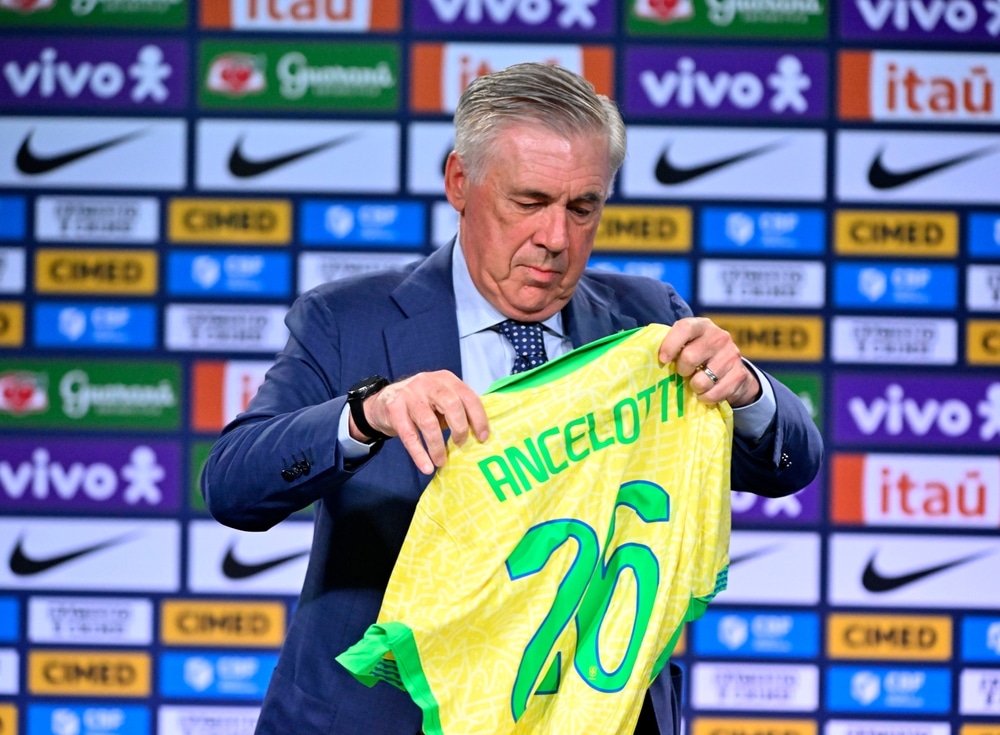
The Brazilian Football Confederation (CBF) has solidified its long-term strategy for international dominance by securing Carlo Ancelotti through the 2030 FIFA World Cup. This significant contract extension provides the Seleção with rare managerial stability as they navigate the next two World Cup cycles. Ancelotti, who assumed leadership of the national team last summer, is tasked with the monumental challenge of ending Brazil’s championship drought and securing a sixth star—a feat the nation has chased since its last triumph in 2002.
Despite a turbulent start to the qualifying rounds before his arrival, Ancelotti has successfully stabilized the squad, guiding them through the rigors of qualification to ensure their place on the world stage. Recognizing the potential of the current roster under the guidance of one of football’s most decorated tacticians, the CBF moved to ensure his leadership remains in place for the foreseeable future.
Reflecting on his tenure so far, Ancelotti expressed a deep appreciation for the unique footballing culture in Brazil. He noted that his first year was dedicated to understanding the weight of the jersey and laying the groundwork to return the team to the pinnacle of the sport. With the extension now official, the focus shifts toward a sustained period of growth and competitive success over the next four years.
Future Outlook for the Seleção Under Ancelotti’s Leadership
Statistically, Ancelotti’s early tenure has seen a balanced return of five wins, three losses, and two draws across 10 fixtures. However, beyond the win-loss column, the Italian manager has prioritized defensive structure—a critical component for any side harboring ambitions of winning a knockout-style tournament like the World Cup. This emphasis on tactical discipline is designed to provide a solid platform for Brazil’s legendary attacking flair to flourish.
As the 2026 tournament approaches, Ancelotti has already begun finalizing the 26-man squad that will carry the nation’s hopes. A notable inclusion in the preliminary roster is veteran forward Neymar. The manager’s decision to keep the star attacker in the mix highlights a strategy of blending experienced leadership with the emerging young talent currently breaking into the European club scene.
Brazil is set to kick off its upcoming World Cup journey with a high-stakes opener against Morocco on June 13. This will be followed by a clash with Haiti on June 19, before wrapping up the initial stage against Scotland on June 24. These fixtures will serve as the first major test of Ancelotti’s long-term vision for the team.
Final Thoughts
By extending Carlo Ancelotti’s contract through 2030, Brazil has opted for a “steady hand” approach to their national team program. This commitment allows the manager to implement a consistent philosophy over several years, moving away from the short-term pressures that often plague international management. If Ancelotti can successfully marry his tactical pragmatism with Brazil’s natural creativity, the Seleção will undoubtedly be among the favorites to reclaim their status as world champions in the years to come.