







In 2006, the world gathered in Germany for a World Cup that featured 736 elite players across 32 nations. Fast forward two decades, and the landscape of professional football has shifted entirely. While icons like Frank Lampard, Xabi Alonso, and Cesc Fabregas have traded their boots for tactical clipboards as managers, a legendary few refuse to walk away from the pitch. Remarkably, only 10 players from that 2006 tournament remain active in the professional game today, including a trio of multiple Ballon d’Or winners who have defined an entire era.
Here is the definitive look at the 10 durable stars from the 2006 World Cup who are still competing in 2026.
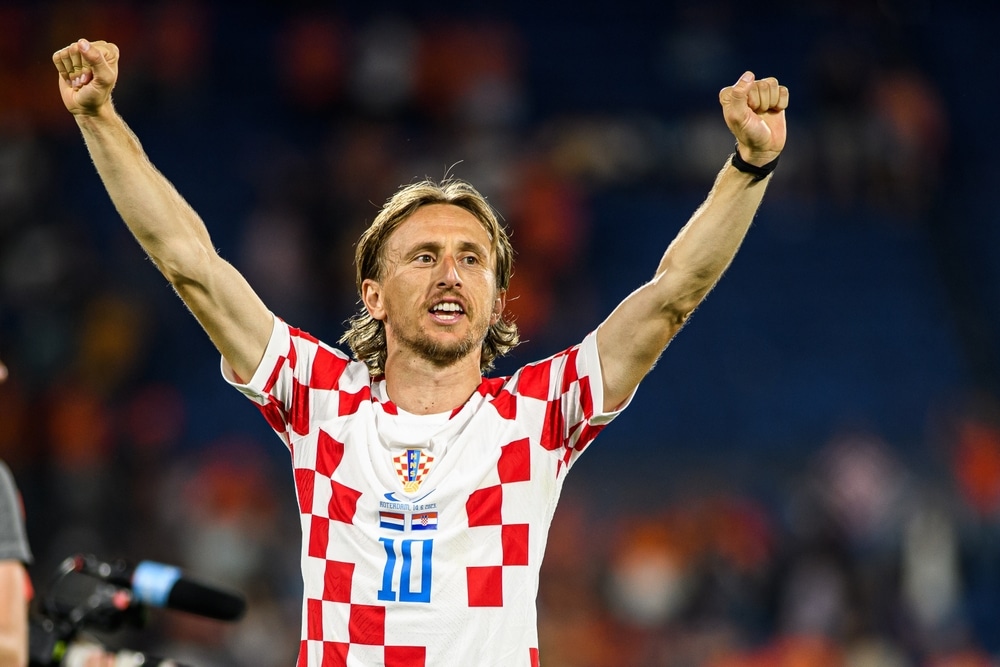
Luka Modric: The Ageless Maestro
During the 2006 World Cup, Luka Modric was a promising talent playing a peripheral role in a Croatia squad that suffered a group-stage exit. Since then, he has evolved into his nation’s greatest footballing export, leading them to a World Cup final in 2018 and a third-place finish in 2022. As Croatia prepares for the 2026 tournament, Modric remains a vital component of the team. Having only missed South Africa 2010 during his long international career, the 2026 edition marks his fifth appearance on the world’s biggest stage.
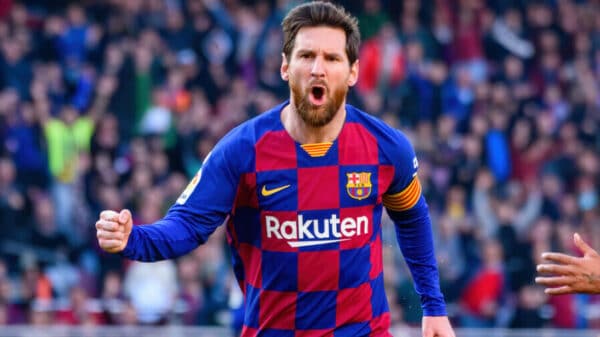
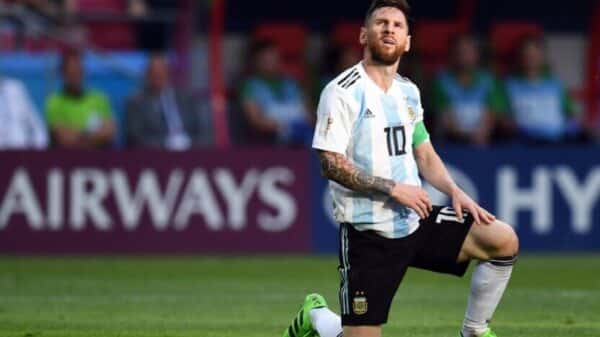
Lionel Messi: From the Bench to Global Icon
The 2006 tournament is often remembered in Argentina for the controversial decision to leave a teenage Lionel Messi on the bench during their quarter-final loss to Germany. That early heartbreak was eventually replaced by ultimate triumph, as Messi led “La Albiceleste” to consecutive Copa America titles and the 2022 World Cup trophy. Now playing in the United States, Messi’s familiarity with the local climate and conditions could be a significant advantage as he looks to navigate one final World Cup cycle at an unprecedented age for an elite attacker.
Cristiano Ronaldo: The Record-Breaking Captain
Cristiano Ronaldo’s 2006 campaign was marked by his first World Cup goal against Iran and a controversial moment involving Manchester United teammate Wayne Rooney in the quarter-finals. Twenty years later, Ronaldo’s statistics are staggering: he has surpassed 140 international goals and earned over 220 caps. Having captained Portugal for nearly two decades, Ronaldo is poised to join Messi as one of the first players to ever participate in six different World Cup tournaments, fueled by a relentless drive that shows no signs of waning.
Sergio Ramos: Spain’s Defensive Titan
By the time the 2006 World Cup arrived, Sergio Ramos was already a household name and a regular for Spain at just 20 years old. He would go on to become a cornerstone of the “Golden Generation” that secured a World Cup and two European Championships. His club career was equally decorated, defined by a trophy-laden era at Real Madrid. While he has recently spent time playing in Mexico for Monterrey and is currently searching for a new club, the veteran defender has not yet officially called time on his legendary career.
Oscar Ustari: Reunited with Greatness
Oscar Ustari’s career provides a fascinating narrative arc. A teammate of Messi in 2006, the goalkeeper has experienced a journeyman’s path that saw him serve as a backup in various European leagues, including stints in Spain and England. In a twist of fate, he eventually found himself sharing a locker room with Messi once again at Inter Miami. Although currently a free agent, the 39-year-old remains part of the active player pool, proving that goalkeeping longevity is a unique asset.
Guillermo Ochoa: Mexico’s World Cup Specialist
Few players are as synonymous with the World Cup as Guillermo Ochoa. Known for his spectacular saves on the international stage, Ochoa’s club career has been a nomadic journey through France, Spain, Belgium, Italy, and his native Mexico. Now 40 years old and playing in Cyprus with AEL Limassol, Ochoa is aiming for a fairy-tale conclusion to his career as he prepares to represent Mexico in a home World Cup in 2026.
Lukasz Fabianski: Defying the Odds in Goal
Lukasz Fabianski traveled to Germany in 2006 as a highly-rated prospect and the reigning Goalkeeper of the Year in Poland. While many of his 2006 contemporaries retired years ago, Fabianski has maintained a high level of performance in the English Premier League. Despite briefly considering retirement after being released by West Ham, he returned to the fold to provide veteran cover. Though his future at the club is uncertain following their recent struggles, his presence in the professional ranks 20 years after his first World Cup is a testament to his professionalism.
Lukas Podolski: The Polish-German Powerhouse
Lukas Podolski was the breakout star of the 2006 World Cup, earning the Young Player of the Tournament award on home soil. His career took him to some of the world’s biggest clubs and ended with a World Cup winner’s medal in 2014. In his later years, Podolski has balanced his business ventures—including a successful kebab chain—with a return to his roots. For the past six years, he has been playing in Poland for Gornik Zabrze, the club located in his birthplace, continuing to showcase the powerful left foot that made him a global star.
Roque Santa Cruz: The Striker Who Never Stops
Roque Santa Cruz is the ultimate outlier in terms of athletic longevity. At 44 years old, the Paraguayan forward is still finding the back of the net in his homeland with Libertad. Having played at the highest levels in the Bundesliga and the Premier League, Santa Cruz’s ability to remain physically competitive in a professional top flight two decades after the 2006 World Cup is nothing short of extraordinary.
Jose Montiel: The Professional Journeyman
While less famous than some of his peers on this list, Jose Montiel’s career is a masterclass in perseverance. A member of the Paraguay squad in 2006 alongside Santa Cruz, Montiel spent years navigating the Italian league system with clubs like Udinese and Reggina. Today, he continues to ply his trade in the Paraguayan second tier with 12 de Octubre. His inclusion on this list highlights the diverse paths players take to remain in the professional game long after their international peak.
The 2006 World Cup was a turning point for football, witnessing the emergence of future legends and the twilight of past masters. To see these 10 individuals still competing 20 years later is a rare occurrence in modern sports. Whether they are chasing one final trophy or simply playing for the love of the game, their presence in 2026 serves as a living bridge to one of the most memorable eras in football history.