


While their partnership at Stamford Bridge yielded immense silverware, the alliance between Jose Mourinho and Roman Abramovich always felt like a pragmatic arrangement rather than a shared vision. After dismissing Claudio Ranieri in 2004 following a season without trophies, Abramovich viewed Mourinho as a proven winner capable of delivering immediate results. However, the owner famously craved a “sexy,” expansive brand of football—a style that often clashed with Mourinho’s clinical, result-oriented pragmatism.
The friction between the two intensified over transfer strategy. While Mourinho appreciated the billionaire’s financial backing, he often bristled at the owner’s penchant for vanity signings. This fundamental disagreement reached a breaking point in the summer of 2006 with the arrival of Andriy Shevchenko.
The Transfer Conflict: Abramovich’s Desire vs. Mourinho’s Tactics
Following consecutive Premier League titles, Chelsea’s hierarchy turned their full attention toward Champions League glory. To bolster the attack alongside Didier Drogba, Mourinho identified Barcelona’s Samuel Eto’o as his primary target. Abramovich, however, had spent three years pursuing Shevchenko and finally used his influence to secure the Ukrainian captain.
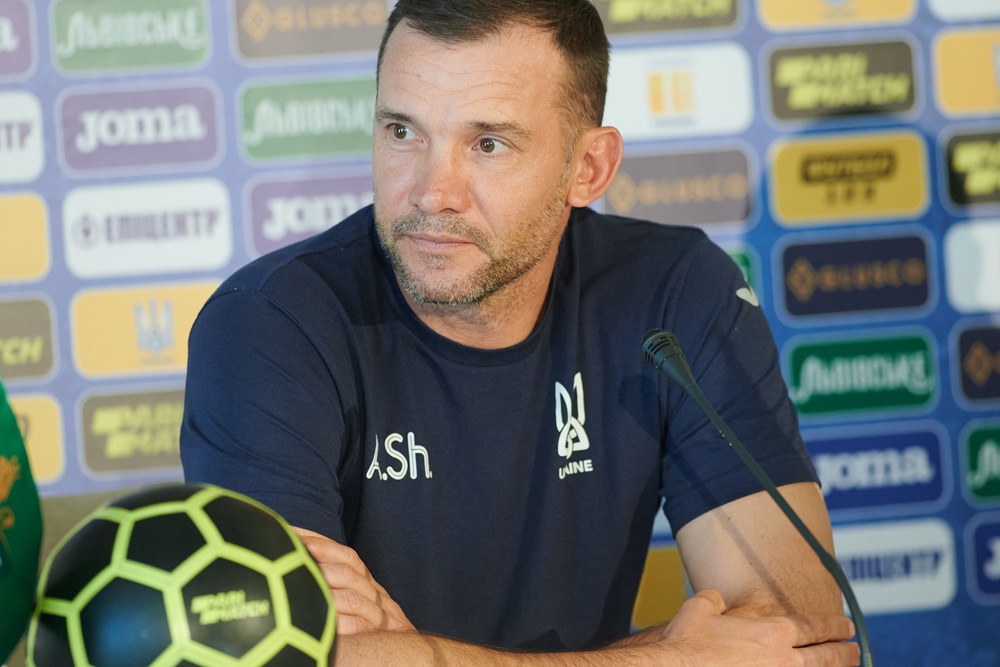
Shevchenko admitted at the time that the owner’s relentless persistence, combined with changes in his personal life, made the move to London feel right. It was a clear victory for the boardroom over the dugout. Mourinho, uncharacteristically, initially accepted the decision with a professional facade.
On paper, the acquisition was hard to criticize. Shevchenko arrived as one of the most prolific strikers in world football, having netted 173 goals for AC Milan and secured the Ballon d’Or in 2004. His tenure began with promise; a clinical finish on his debut in the Community Shield against Liverpool suggested he would transition seamlessly to the English game. However, the reality proved far more complex.
Physical Demands and Tactical Hurdles in the Premier League
The transition was hampered by exhaustion following Ukraine’s run to the 2006 World Cup quarter-finals. Furthermore, the sheer physicality and pace of the Premier League caught Shevchenko off guard. Used to the more methodical and technical nature of Serie A, he often struggled with the lack of time on the ball, frequently losing possession as he looked for an extra touch.
Perhaps the biggest obstacle to Shevchenko’s success was the explosive form of Didier Drogba. During the 2006-07 campaign, the Ivorian striker reached a new echelon of performance, scoring 33 goals—a total that eclipsed his previous two seasons combined. With Drogba established as the focal point, Shevchenko was frequently pushed into wider roles or deeper positions, moving him away from the “danger zone” where he had been so lethal in Italy.
Mourinho did little to hide his preference for Drogba’s output, publicly hailing him as the best striker in Europe. Although Shevchenko contributed a respectable 14 goals and 12 assists that season, including vital strikes in European competition, he could never escape the “underwhelming” label bestowed by the Chelsea faithful.
The Breakdown: A Power Struggle at the Bridge
The tension peaked in January 2007. After failing to secure alternative striking options like Jermain Defoe or Milan Baros, Mourinho took the bold step of dropping Shevchenko for a fixture against Wigan. Internal suspicions arose when the striker missed a League Cup semi-final citing injury; some believed the ailment was a convenient way to avoid the scrutiny of potentially failing to score against lower-league opposition.
In response, Abramovich reportedly blocked any further recruitment, demanding that Mourinho find a way to integrate his star signing. The refusal to accept a Russian-speaking coach, intended to bridge the gap between the player and the manager, only deepened the divide. While Mourinho avoided the sack that summer, the relationship with his employer was fundamentally broken.
The situation soured further when Shevchenko withdrew from a crucial Champions League semi-final against Liverpool due to a groin injury, an absence that reportedly infuriated Mourinho. By the time the next season began, the manager’s tenure was nearing its end. Fittingly, Shevchenko scored the final goal of the first Mourinho era during a lackluster 1-1 draw against Rosenborg.
A Legacy Defined by Internal Politics
Reflecting on the era later, Mourinho admitted that Shevchenko was never his first choice. He noted that while the Ukrainian was a “prince” in Milan, Chelsea’s philosophy demanded a different kind of humility and work rate. Ultimately, Mourinho’s skepticism was validated by subsequent events; Shevchenko continued to struggle under Avram Grant and eventually departed in 2009 with 22 goals in 77 appearances.
Shevchenko himself never blamed Mourinho for his difficulties, pointing instead to recurring injuries and the stark contrast between the technical Italian league and the physical English game. He maintained that Chelsea fans never saw the version of him that dominated Europe for a decade.
Final Thoughts on the Shevchenko Era
The story of Andriy Shevchenko at Chelsea serves as a cautionary tale of what happens when a club’s recruitment strategy is at odds with its manager’s tactical requirements. While his statistics were not catastrophic, he became the unwitting centerpiece of a power struggle between a headstrong manager and an interventionist owner. For many, his time in London is remembered less for his goals and more for being the catalyst that eventually ended Jose Mourinho’s first historic spell at the club.