






Paris Saint-Germain solidified their status as a modern European dynasty on Saturday night, overcoming Arsenal in a tense UEFA Champions League final at the Puskas Arena in Budapest. Following a hard-fought 1-1 draw that persisted through extra time, the Parisian side triumphed 4-3 in a high-stakes penalty shootout. This victory marks a historic milestone, as PSG becomes only the second club in the modern era to successfully defend their Champions League title, echoing the legendary three-peat achieved by Real Madrid between 2016 and 2018.
Arsenal Strikes Early Through Kai Havertz
The match ignited early when Arsenal took a surprise lead in the 6th minute. The sequence began with a defensive clearance from Marquinhos that took an unexpected deflection off Leandro Trossard, falling perfectly into the path of Kai Havertz. The German international displayed clinical composure, surging toward the goal and rifling a powerful left-footed strike into the roof of the net from a challenging angle.
With this goal, Havertz further etched his name into the record books. He joined an exclusive group of iconic players, including Cristiano Ronaldo and Mario Mandzukic, who have managed to score in a Champions League final for more than one club.
PSG Responds with Statistical Dominance and a Second-Half Equalizer
Despite trailing early, PSG dictated the tempo of the game for the majority of the night. Their control of the ball was near-absolute, leaving Arsenal to operate with just 26% possession—the lowest recorded figure for any team in a Champions League final since 2004. Arsenal’s defensive shape held firm for an hour, but the pressure eventually forced a mistake.
The turning point arrived in the 65th minute when Khvicha Kvaratskhelia was brought down in the box by Cristhian Mosquera. Following a swift VAR confirmation, Ousmane Dembele stepped up to the penalty spot. The French winger remained calm under pressure, slotting the ball home to level the score. The equalizer sent the match into a stalemate that lasted through the remainder of regulation and a scoreless extra-time period, marking the first time in a decade that a Champions League final was not decided within 90 minutes.
Clinical Penalty Shootout Secures the Victory for Paris
With the title hanging in the balance, the match moved to a penalty shootout. PSG’s designated kickers—Gonçalo Ramos, Desire Doue, Achraf Hakimi, and Lucas Beraldo—all converted their chances with precision. Although Arsenal goalkeeper David Raya managed to save Nuno Mendes’ effort, the London club could not capitalize on the opening.
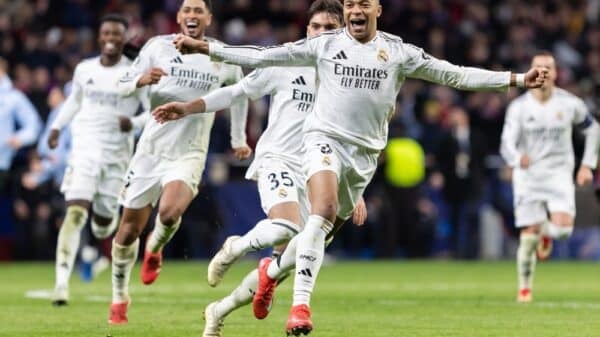
Arsenal’s Eberechi Eze and Gabriel Magalhaes both failed to find the back of the net. The tension reached its peak when Gabriel’s final attempt sailed over the crossbar, confirming a 4-3 shootout win for the French champions and sparking wild celebrations in Budapest.
Luis Enrique and PSG Secure Historic Back-to-Back Titles
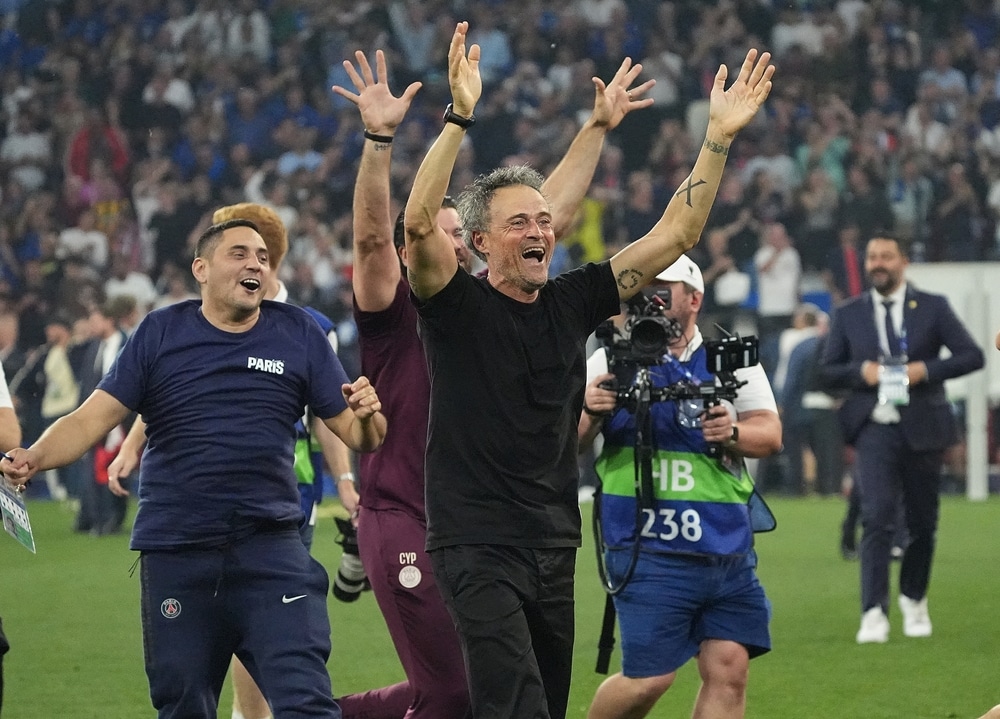
This victory places PSG among the elite, making them the 10th club in European Cup history to win consecutive trophies. It also serves as a personal triumph for head coach Luis Enrique. By securing his third Champions League trophy—adding to his 2015 win with Barcelona and his title with PSG last season—Enrique joins a prestigious tier of managers who have won the competition three or more times.
The Parisian side’s path to the trophy was defined by an unprecedented offensive output, as they finished the campaign with a record-breaking 44 goals. Conversely, the result was a bitter pill for Arsenal, whose long-standing wait for a premier European trophy now extends to 266 matches without a Champions League title.
Final Thoughts on PSG’s European Supremacy
PSG’s successful title defense cements their evolution from perennial contenders to the dominant force in European football. By maintaining composure after an early Havertz goal and navigating the pressure of a shootout, the French giants proved their championship mettle. As Luis Enrique continues to climb the ranks of all-time great managers, PSG’s record-breaking scoring run and back-to-back titles suggest that the “City of Light” may remain the center of the footballing world for years to come.