








First Half: Manchester City’s Struggles
LONDON — During the EFL Cup final at Wembley Stadium, Manchester City’s presence in the first half was almost nonexistent. With 43 minutes gone, Arsenal’s goal hadn’t come close to being threatened. Erling Haaland, one of City’s star forwards, hadn’t even touched the ball inside the penalty area. This match appeared to be set for a single, hard-fought goal.
Turning Point for City
But then something shifted within City’s dynamics, revealing as much about Arsenal’s vulnerabilities as it did about Pep Guardiola’s strategic vision. City approached the final with an audacious confidence, realizing there was little to fear from their opponents. Just before halftime, they unleashed their dribblers, embracing a higher risk strategy through one-on-one plays, challenging some of the best defenders they faced.
City’s Initial Attempts
Although City wasn’t completely averse to challenging Arsenal from the start, with players like Rayan Cherki, Antoine Semenyo, and Jeremy Doku on the pitch, they struggled to make meaningful attacks early on. Despite attempting eleven take-ons during the first half, their efforts usually resulted in running into multiple Arsenal defenders. Particularly, Doku’s attempts often led to being overpowered, which stifled City’s prospects of creating danger.
Collective Forward Momentum
Faced with a stagnating offense, City adopted a more collective approach, concluding that every player should contribute to advancing the attack if their forwards faltered. When referee Peter Bankes signaled the start of the second half, it unleashed eleven players determined to press forward. Matheus Nunes and Bernardo Silva both pushed forward, exhibiting a fearless mentality that showcased their disregard for Arsenal’s potential counterattacks.
Guardiola’s Surprise
This shift was less a strategic masterstroke by Guardiola and more a testament to how City found their rhythm, to the surprise of both him and Arsenal’s Mikel Arteta. Guardiola later commented that he could hardly believe how effectively his team performed in the second half, further highlighting the unexpected shift in momentum.
Defensive Breakdown for Arsenal
When Nico O’Reilly scored his second goal, it became clear just how overwhelmed Arsenal’s defense was. City had seven players in the attacking penalty area, signifying their dominance. While the headlines might focus on Kepa Arrizabalaga’s errant play leading to a goal, it also underscored Arsenal’s defensive frailty, which had no solutions to counter City’s persistent pressure.
The Impact of City’s Press
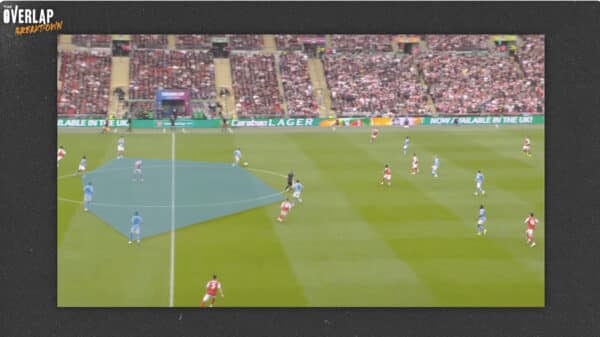
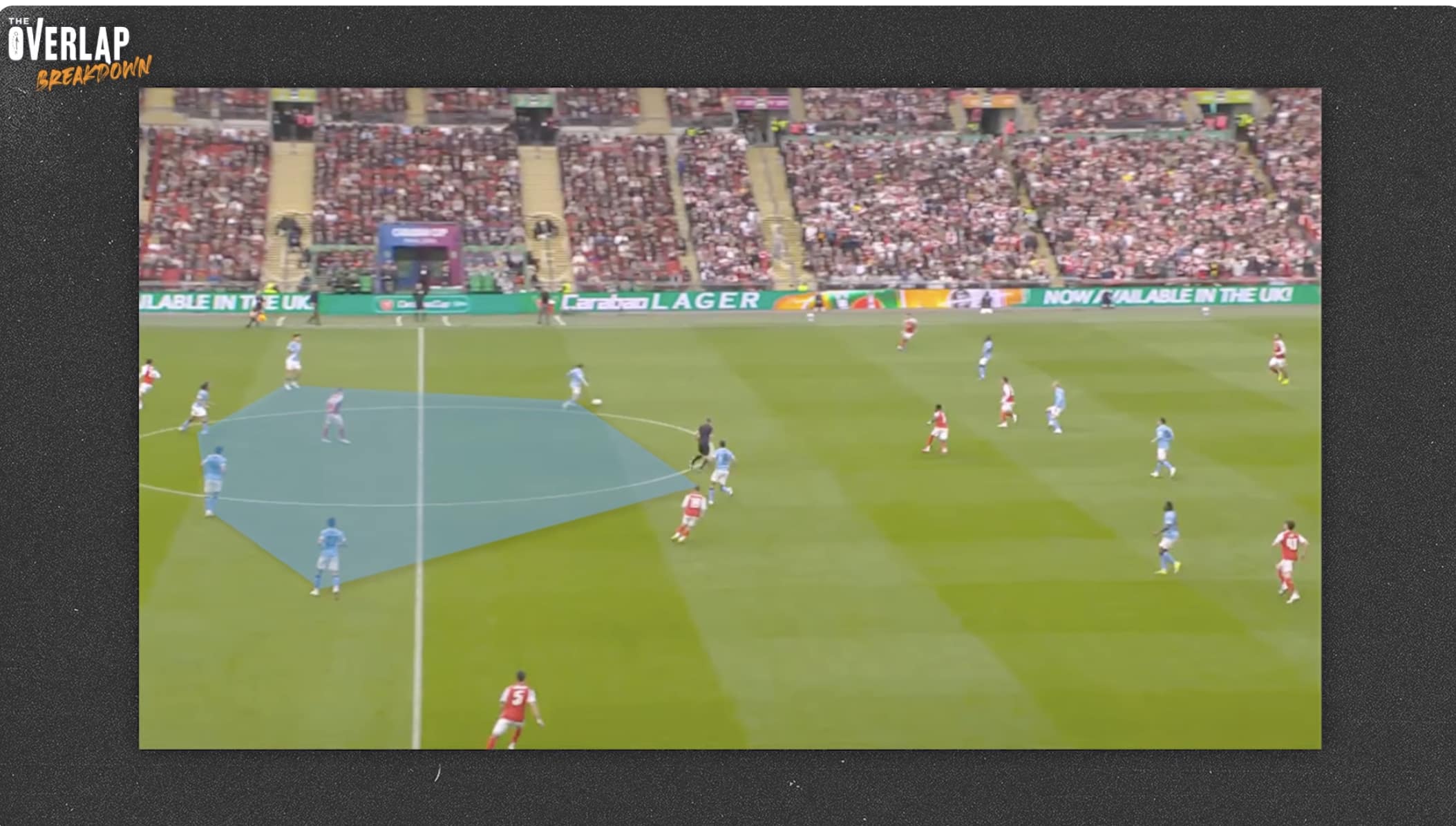
Before City intensified their offensive, their pressing game was already dismantling Arsenal’s build-up strategy. Guardiola’s front four executed a strategic block effectively, preventing easy passes to Arsenal’s midfielders Martin Zubimendi and Declan Rice. As Arsenal struggled to adapt, they faced significant challenges in breaking through City’s relentless press.
Issues in Arsenal’s Midfield
Historically, Arsenal had a reputation for skillfully navigating through opposing defenses. However, this match revealed their struggles to do so without key players like Martin Ødegaard. Arsenal’s midfielders found themselves immobilized; Zubimendi, for instance, received just one pass in the first 20 minutes. In contrast, the absence of David Raya was palpable as Arsenal’s transitions faltered without his precise long-range passing ability.
Drastic Shift in Performance
Between the beginning of the second half and the 71st minute, Arsenal registered zero progressive passes, severely limiting their ability to regain control. This drastic contrast in performance emphasizes how City’s resurgence pushed Arsenal onto the back foot, resembling an artist’s failed attempt to evoke beauty on a soccer field.
Arteta’s Reflections
Post-match, Arteta acknowledged the issues his team faced in managing their ball possession and counter-attacks. He pointed to City’s superior play during crucial phases of the game, admitting that they needed to learn from this experience as they prepare for their next encounters.
The Next Challenge for Arsenal
City’s impressive, press-intensive gameplay raises a pertinent question: why don’t more teams employ a similar strategy against top-tier opponents? The answer lies in the inherent risk; most teams cannot afford a single lapse that allows City, with their talented forwards, to exploit defensive gaps. Arsenal’s own attack, despite its potential, fell short in critical moments of this match, as evidenced by the limited contributions from their forwards.
Conclusion
As Arsenal regroup from this pivotal match, they face an essential period of analysis and reflection. With a significant clash against City scheduled in the coming weeks, this defeat acts as a wake-up call that could foster improvements in their approach. Such introspection is crucial for maintaining their competitive edge as they head deeper into the season.